

LTL shipping, short for less-than-truckload, moves freight that does not fill a whole trailer. Your pallets share a truck with goods from other shippers, and you pay only for the space you use. For Canadian businesses, this is often the most cost-effective way to move one to ten pallets. This guide explains how it works, what drives the price, and when to choose it. Hauler Freight offers LTL shipping across Canada and North America.
What Is LTL Shipping?
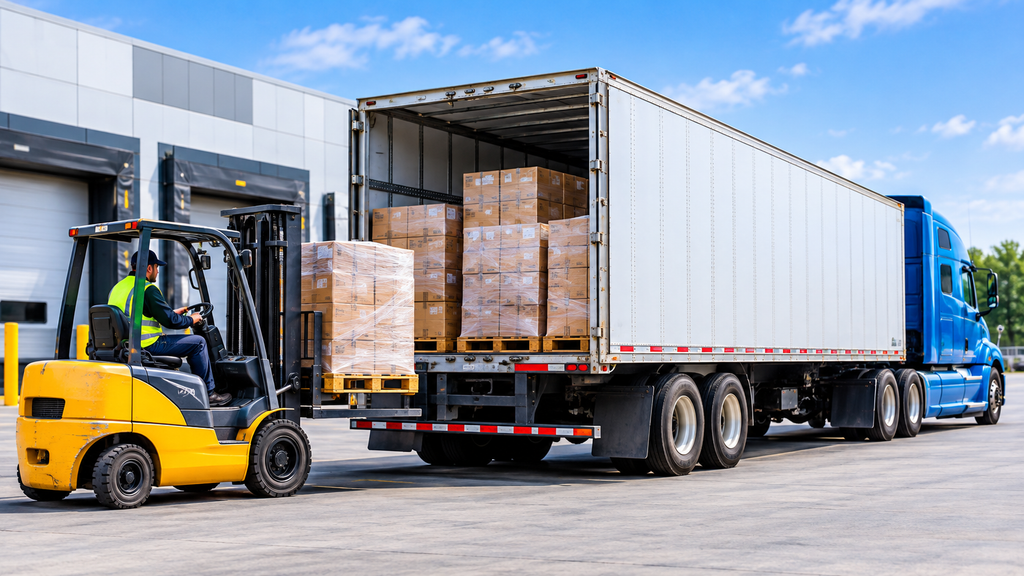
LTL shipping is a freight service for loads that are too big for parcel carriers and too small for a full truck. A carrier collects pallets from several shippers, groups them by destination, and moves them through a network of terminals. Each shipper pays for its share of the trailer, not the whole truck. That shared model is why LTL shipping costs less than booking a dedicated truck for a small load.
LTL meaning in plain terms
LTL stands for less-than-truckload. The opposite is full truckload (FTL), where one shipper books the entire trailer. With LTL, your freight takes a slice of the trailer, measured by weight, pallet count, or linear feet of floor space.
How much freight counts as LTL
Most LTL freight is palletized and falls between one and ten pallets. Weight usually runs from about 150 lb to 10,000 lb, and some sources stretch the top of that range to 15,000 lb. Parcel carriers handle single boxes up to about 150 lb. Heavier pieces, or many boxes going to one address, are the point to compare LTL quotes.
Who uses LTL shipping in Canada
These businesses rely on partial loads most often:
- Manufacturers sending finished goods to distributors
- Wholesalers restocking stores and branch locations
- Online sellers moving inventory to fulfillment warehouses
- Contractors shipping materials and equipment to job sites
- Importers moving a few pallets inland from a port
How LTL Shipping Works, Step by Step
Every LTL shipping order follows the same basic path from your dock to the receiver’s door.
The shipment journey
- Pack and label. Secure the freight on a pallet and mark every side with the destination address.
- Measure and weigh. Record the weight and the length, width, and height of each pallet. Round up to the next whole number.
- Compare quotes. Enter the pickup and delivery locations, pallet details, and any extra services.
- Book and sign the bill of lading. This contract between you and the carrier lists the goods, weight, origin, and destination.
- Pickup. A local driver collects the freight, and you receive a tracking number.
- Linehaul and cross-dock. The pallets travel to a terminal, then get sorted and reloaded onto trucks headed to the destination region.
- Final-mile delivery. A local truck brings the freight to the receiver, often after a booked appointment.
- Confirm delivery. The receiver checks the freight and notes any damage on the delivery receipt.
Why LTL shipping times are estimates
Your pallets rarely ride one truck from start to finish. They pass through terminals, and each handoff adds time. Distance matters most, followed by weather, the number of stops on the route, holidays, and terminal delays. Most carriers give delivery estimates, and guaranteed delivery usually costs extra.
LTL vs FTL vs Parcel: Which Option Fits Your Shipment?
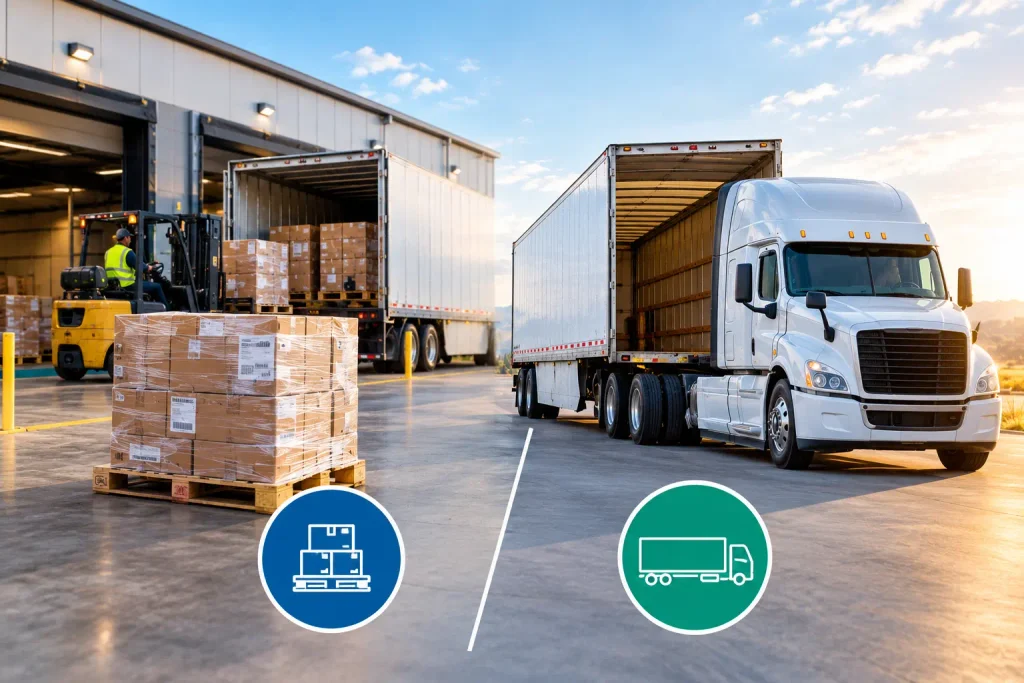
The right mode depends on size, weight, and how often you ship. This table shows where each option fits.
| Parcel | LTL | FTL | |
|---|---|---|---|
| Typical load | Single boxes up to about 150 lb | 1 to 10 pallets | Most or all of a trailer |
| Size limit | About 165 in. of length plus girth | Pallet based, set by the carrier | Full trailer |
| Price basis | Weight, size, and zone | Lane, weight, and space used, plus class on cross-border loads | Lane and distance for the whole truck |
| Handling | Many touches on conveyors | Forklifts, with terminal transfers | Direct from pickup to delivery |
| Delivery speed | Fast, with guaranteed dates | Slower, with estimates unless guaranteed for a fee | Direct, with no terminal stops |
| Best for | Small, light orders | Partial loads on a budget | Large loads, or loads that cannot share space |
Parcel vs LTL: the 150 lb rule
Parcel carriers handle single boxes up to about 150 lb and about 165 inches in length plus girth. Once a box passes that limit, or you ship several boxes to one address, ask for an LTL quote as well. Putting boxes on one pallet usually lowers the cost per item, and forklifts mean fewer hands touch each box.
LTL vs FTL: when a dedicated truck wins
Book full truckload shipping when your freight fills most of a trailer, cannot share space, or must go straight from pickup to delivery with no terminal stops. LTL shipping keeps the edge when your volume is small or uneven, because you can ship less, more often, without waiting to fill a truck.
What Affects LTL Shipping Cost in Canada?
An LTL shipping quote comes from several inputs, and a change in any one of them moves the price. Carriers do not charge a flat rate per pallet.
Core price drivers
- Lane: the pickup and delivery postal codes. Busy corridors cost less than low-volume rural routes.
- Weight: heavier freight costs more to move.
- Space used: pallet footprint and height, often measured in linear feet of trailer.
- Stackability: non-stackable freight takes more room and can bring surcharges.
- Fuel: carriers add a fuel surcharge that follows fuel prices.
Accessorial fees
Accessorials are services beyond standard dock-to-dock delivery. Common ones include:
- Liftgate (tailgate) service
- Residential delivery
- Limited-access delivery
- Inside pickup or delivery
These are usually flat fees. List every service you need when you request the quote, because a change at pickup or delivery often costs more.
Freight class: when it applies in Canada
Freight class is a rating from 50 to 500 that reflects density, handling, stowability, and liability. The system comes from the National Motor Freight Traffic Association in the United States. Class pricing applies within the USA and on cross-border loads. Practices differ across Canadian carriers, so ask which method your quote uses. If the class or weight on your paperwork does not match the freight, the carrier can reclassify it and bill the difference.
How Canadian Geography Shapes LTL Shipping Rates
A pallet from Toronto to Montréal and a pallet from Edmonton to Yellowknife are both LTL freight, but they cost and move very differently. Lane density, one-way freight flows, and weather explain most of the gap.
Regional lane guide
| Region | What shapes the rate | Planning tip |
|---|---|---|
| Ontario and Québec | The busiest freight corridor, with about 56% of Canadian trucking establishments headquartered here and the lowest per-mile LTL rates in the country | Use this corridor as the price benchmark for your other lanes |
| Atlantic Canada | One-way freight flows lift per-mile rates. Winds above 70 km/h bar high-sided trailers from the Confederation Bridge, causing about 50 closures each winter. The Marine Atlantic ferry to Newfoundland carries a 13% fuel surcharge | Add buffer days in winter and ask whether ferry costs sit in your quote |
| Prairies and British Columbia | Core lanes between Vancouver, Calgary, and Edmonton price well, but rural stops cost sharply more | Compare rural delivery with pickup at the nearest terminal |
| Northern Canada | Nunavut carrier rates can run several times southern rates, and freight often changes hands at Edmonton, Grimshaw, Hay River, or Montréal | Plan around the seasonal windows below |
Seasonal windows that affect delivery
- Winter ice roads: the Tibbitt-Contwoyto ice road runs from about early February to late March.
- Nunavut sealift: the sealift season runs from late June to late October.
- Winter storms: icy roads and closures slow routes, so build in extra days and set tracking alerts.
Ship before a window closes, not after, because a missed window can mean a long wait for the next one.
Cross-border LTL between Canada and the US
Hauler Freight moves freight within Canada, from Canada to the US, and from the US to Canada. Cross-border loads need customs paperwork, and shipments entering the USA need an NMFC freight class. Share your product description, weight, and pallet details early so the quote and the border documents match. Read more about cross-border shipping between Canada and the US.
When Does LTL Shipping Make Sense?
Signs LTL shipping is the right fit
- Your load is one to ten pallets.
- Single boxes weigh more than about 150 lb, or you send many boxes to one address.
- You ship often and in small quantities instead of waiting to fill a trailer.
- Your delivery date has some flexibility.
- Your goods can share a trailer with other freight.
When another option is better
- Full trailer volume: choose full truckload.
- Temperature-sensitive goods: ask about temperature controlled shipping.
- Single light boxes: a parcel carrier is usually simpler.
- No room for terminal handling: request guaranteed delivery or a dedicated truck.
How to Prepare Freight and Avoid Surprise Charges
Most surprise charges on an LTL shipping invoice come from details that did not match the freight.
Pack and label every pallet
Use a sturdy pallet and keep boxes inside its edges. Wrap or strap the load so nothing shifts. Label every side with the destination address and handling notes. Terminals move freight by forklift, so a firm, well-wrapped pallet survives the trip better.
Pre-booking checklist for an accurate quote
- Weigh the loaded pallet and measure its length, width, and height. Round up.
- State whether the pallet is stackable.
- List every accessorial you need at pickup and delivery.
- Confirm whether each address is residential or limited access.
- Match the details on the quote and the bill of lading, because mismatches can trigger reweigh or reclassification fees.
- Ship in one consolidated load when you can. Hauler Freight also offers warehousing services in Toronto, which helps when goods arrive from several suppliers.
Get Your LTL Quote from Hauler Freight
Share your pickup, delivery, and pallet details, and the Hauler Freight team will price your shipment.
Request an LTL quote | Explore our LTL shipping service
Frequently Asked Questions About LTL Shipping
What does LTL stand for in shipping?
LTL stands for less-than-truckload. It describes freight that does not fill a full trailer, so it shares space with goods from other shippers. You pay for the space and weight you use instead of the whole truck. Carriers measure your share by weight, pallet count, or linear feet. The opposite is full truckload, or FTL, where one shipper books the entire trailer.
How many pallets count as LTL shipping?
Most carriers treat one to ten pallets as LTL freight. Weight usually falls between about 150 lb and 10,000 lb, and some sources go as high as 15,000 lb. If your freight fills most of a trailer, compare LTL quotes with full truckload pricing. At some point a dedicated truck costs about the same and skips the terminal handling.
Is LTL cheaper than FTL?
Yes, for small loads. LTL means you pay for your share of the trailer, while FTL charges for the whole truck even when it runs partly empty. The gap closes as your load grows. When your pallets fill most of a trailer, a dedicated truck can match LTL pricing and remove terminal stops, so request both quotes before you decide.
How long does LTL shipping take in Canada?
Transit time depends mainly on distance. LTL freight passes through terminals instead of riding one truck the whole way, so weather, route stops, holidays, and terminal delays add time. Carriers give delivery estimates, and guaranteed delivery usually costs extra. Ask for the estimated delivery window when you book, and add buffer days in winter and on rural or northern routes.
What is the difference between LTL and parcel shipping?
Parcel carriers move single boxes up to about 150 lb and 165 inches in length plus girth, with frequent scans and guaranteed dates. LTL carriers move pallets through terminals, usually at a lower cost for heavier loads. Parcel pricing follows weight, size, and zone. LTL pricing follows lane, weight, and space used. Switch to LTL when single pieces pass 150 lb or many boxes go to one address.
Do I need a freight class for LTL shipping in Canada?
It depends on the carrier and the route. Freight class, rated from 50 to 500, applies within the USA and on cross-border loads. It reflects density, handling, stowability, and liability. Some Canadian carriers use it, and others price by weight, lane, and space used. Ask which method your quote follows, and keep your weight and dimensions accurate to avoid reclassification charges.
What are accessorial charges in LTL shipping?
Accessorial charges are fees for services beyond standard dock-to-dock delivery. Common examples include liftgate service, residential delivery, limited-access delivery, and inside pickup or delivery. They are usually flat fees, and the amounts vary by carrier. List every service you need when you request a quote, because adding one after pickup often costs more.
Can I ship LTL between Canada and the US?
Yes. Cross-border LTL shipments need customs paperwork, and loads entering the USA need an NMFC freight class. Keep your product description, weight, and pallet details ready before you book, and use the same details on the quote and the paperwork so the border documents match. Hauler Freight moves freight within Canada, from Canada to the US, and from the US to Canada, so you can use one provider in both directions.

