
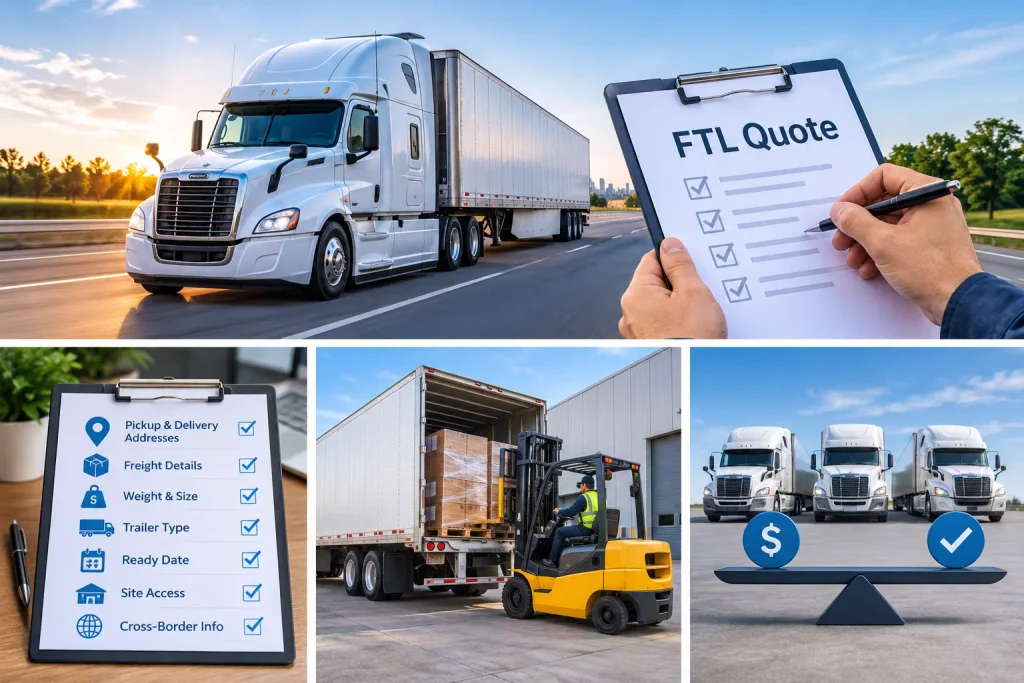
To get a full truckload quote, send your carrier or freight broker the pickup and delivery addresses, freight weight, pallet count, trailer type, and ready date, plus any site limits such as no dock or appointment-only delivery. Then compare each offer line by line, not just by total. This guide shows what to prepare, how to request pricing, and what to check before you book with Haulerfreight.ca freight shipping services.
What a Full Truckload Quote Covers
A full truckload quote is a written price to move one shipper’s freight on a dedicated trailer, from pickup to delivery, with no other customers’ freight on board. It typically bundles the base linehaul charge, a fuel surcharge, and any extra services you requested. Taxes and unlisted extras may sit outside it, which is why the details you send matter as much as the number you receive.
When a full truckload quote beats LTL
Request a full truckload quote when one or more of these apply:
- Your freight fills most of a trailer, often 10 to 12 pallets or more, or weighs 10,000 pounds or more.
- The cargo is fragile or high value, and you want it loaded once and unloaded once, with no terminal transfers.
- You need direct, point-to-point transit on a firm date.
- Pieces are tall, long, or awkward and would draw handling surcharges in shared freight.
Near the threshold, ask for both an FTL quote and a quote for LTL shipping services. A full trailer can cost less than a large stack of LTL pallets.
Quote, rate, and invoice are three different things
A quote is the price offered for the details you gave. A rate is the per-lane or per-mile price the quote is built from. An invoice is what you are billed after delivery, and it can differ if the weight, access conditions, or wait times did not match the quote. Accurate inputs keep all three numbers close together.
What to Prepare Before You Request a Full Truckload Quote
Carriers can only price what they can see. Have these details ready before you ask for pricing.
| Detail | What to share | Why the carrier asks |
|---|---|---|
| Pickup and delivery | Full addresses with postal codes, business or residential, contact names | Sets the lane, distance, and routing |
| Commodity | What the freight is, packaging type, stackable or not | Affects equipment, insurance, and handling |
| Weight and size | Total weight, pallet count, dimensions of the largest piece | Decides trailer fit and legal weight limits |
| Trailer type | Dry van, reefer, flatbed, or step deck | Each has a different cost and supply |
| Dates | Ready-to-ship date and required delivery date | Tight dates cost more than flexible ones |
| Site access | Dock or ground level, forklift, hours, appointment rules | Prevents surprise liftgate or waiting fees |
| Special needs | Temperature range, tarps, straps, hazardous goods | Triggers special equipment and paperwork |
| Border details | Commercial invoice, importer of record, customs broker | Needed for any Canada and U.S. move |
Freight details: carrier’s price first
Weight, pallet count, and trailer type shape the base price more than anything else. Use the actual scale weight or a measured estimate, not a guess. An incorrect weight can force a re-quote or a billing adjustment after delivery.
Site and access details that change the quote
Say whether each stop has a loading dock and a forklift. If the receiver has neither, the truck may need a liftgate or driver help, and you must quote that up front. Also share receiving hours and appointment rules, because waiting time past the free window is billed separately.
Cross-border details for Canada and U.S. loads
If the load crosses the border, say so in your first message. A cross-border full truckload quote depends on the customs documents, who acts as importer of record, and which customs broker files the entry. Confirm whether the price is in Canadian or U.S. dollars, and whether GST/HST and duties are listed separately. For more on this, see our guide to cross-border freight shipping.
How to Get a Full Truckload Quote Step by Step
- Confirm the load needs a full trailer. Check pallet count and weight, then decide whether FTL, partial truckload, or LTL fits.
- Collect the details from the table above, including site access and border information.
- Pick your request channel: an online quote form, a phone call, or an email to your carrier or broker.
- Send the same details to two or three providers so you can compare each full truckload quote fairly.
- Ask every provider to confirm in writing what is included, how long the quote is valid, and which extra charges could apply.
- Book the best-fit offer and keep the quote with your bill of lading.
Where to request a quote: carrier, broker, or online
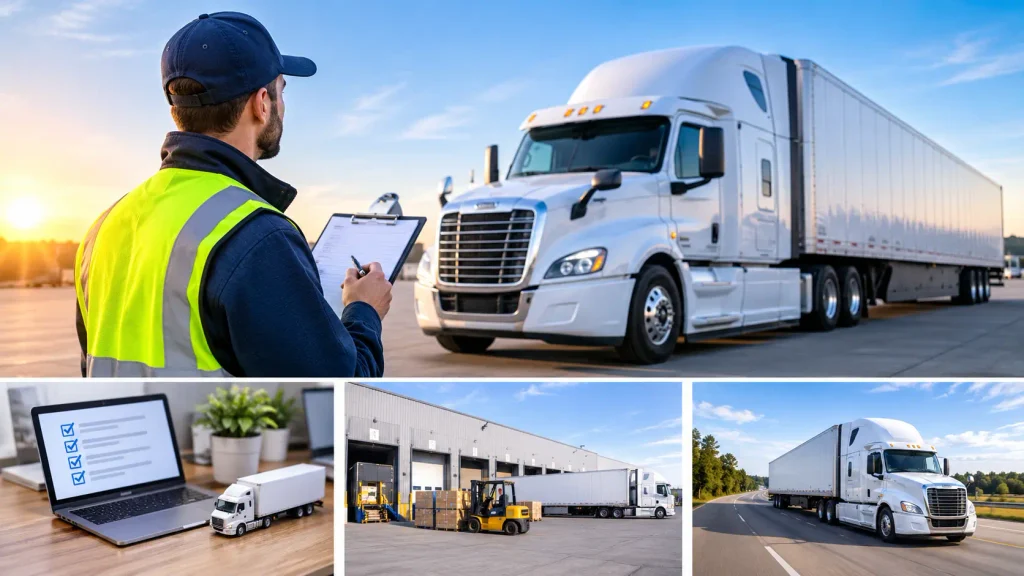
A carrier owns the trucks and knows its own lanes. A freight broker sources capacity from many carriers and can compare options for you. Online tools return fast prices but may assume standard conditions. Standard palletized freight suits an online request. Odd dimensions, border moves, or tight windows are better handled by speaking with a person, and a specialist can also price flatbed trucking services or temperature-controlled loads.
How many quotes are enough
Two or three comparable quotes show you the market without wasting time. Ask for the same pickup date, trailer type, and services every time. A quote that differs in any of those is not comparable.
What Affects Your Full Truckload Quote
Rates move with lane, equipment, timing, and market capacity. Here is how each factor pushes the price up or down.
| Factor | How it moves the quote |
|---|---|
| Lane and distance | Longer lanes cost more in total, though the cost per mile often falls as distance grows |
| Trailer type | Reefers and flatbeds usually cost more than dry vans because of equipment demand and added work |
| Weight and size | Near-limit weights or oversize pieces can require specialty equipment or permits |
| Capacity and season | When trucks are scarce on a lane, such as in peak shipping weeks, prices rise |
| Fuel | A fuel surcharge tied to diesel prices is added on top of the base rate |
| Timing | Same-day or next-day pickups cost more than loads booked with notice |
| Stops and services | Extra stops, liftgate, tarping, or driver assist appear as added line items |
| Border crossing | Customs processing and paperwork add time and cost |
Canadian lane factors most guides skip
Freight rarely moves evenly in both directions. If trucks tend to arrive in a region loaded and leave empty, carriers price the outbound leg higher to cover those empty miles. Long Canadian lanes, remote destinations, and winter road conditions can also affect availability and transit time. Ask your provider whether your lane is easy or hard to cover, and whether a flexible pickup date would lower the price.
How the fuel surcharge works
Most carriers add a fuel surcharge that follows a published diesel price index. It usually appears as a percentage or per-mile amount added to the base rate. Ask which index is used and whether the figure in your quote is fixed until delivery or can change.
How to Compare Full Truckload Quotes Fairly
The lowest total is not always the lowest cost. Check that every offer lists the same items.
| Line item | Question to ask |
|---|---|
| Linehaul | Is this a flat door-to-door price or a per-mile rate? |
| Fuel surcharge | Is it included, and is it fixed? |
| Detention | How many free hours apply at pickup and delivery, and what is the hourly charge after that? |
| Liftgate or inside delivery | Is it needed at either stop, and is it priced? |
| Layover | What is the daily charge if the truck is held overnight? |
| Reconsignment or redelivery | What does a changed address or a failed delivery cost? |
| Taxes and currency | Is GST/HST shown, and is the price in CAD or USD? |
| Cargo coverage | What liability limit applies, and can I see the certificate of insurance? |
An illustrative comparison
These numbers are examples only, not Haulerfreight.ca rates. Suppose Quote A is $2,400 with fuel and two free hours of waiting included. Quote B is $2,250, but fuel is extra at $250 and waiting is billed at $75 per hour from the first minute. After a two-hour dock delay, Quote B reaches $2,650. The cheaper-looking offer ends up costing more.
Red flags in a quote
- No validity date or pickup date.
- No trailer type named.
- Vague wording such as “plus applicable fees” with no list.
- No proof of cargo insurance when you ask for it.
- Pressure to book before you have seen the terms.
Request Your Full Truckload Quote
Share your lane, freight details, and ready date to get a quote from Haulerfreight.ca.
Frequently Asked Questions
How long does it take to get a full truckload quote?
Most straightforward quotes can come back within hours to one business day when you send complete details. Loads with border paperwork, specialty equipment, or tight deadlines can take longer because the provider must confirm capacity and documents first. Accurate weights, addresses, and access details are the fastest way to shorten the wait.
What information do I need to request a full truckload quote?
You need pickup and delivery addresses, a commodity description, total weight, pallet count, trailer type, and your ready and delivery dates. Add dock or forklift availability, appointment rules, and any temperature or handling needs. For Canada and U.S. moves, include customs details too. Complete information lets the provider price once instead of revising later.
How long is a full truckload quote valid?
Validity varies by provider and market, so ask for the expiry date in writing. Spot quotes may hold for a short window because truck availability and fuel costs change, while contract pricing can stay fixed for months. If your ship date is far off, request pricing closer to pickup or ask the provider to hold the price.
Is a full truckload quote the final price?
Not always. A quote covers what you described at the time, so changes in weight, address, wait time, or services can adjust the final bill. Ask which extra charges could apply, such as detention, layover, or liftgate service, and get the list in writing. Accurate details at the start keep the invoice close to the quote.
How many pallets fit in a full truckload?
A standard 53-foot dry van typically holds about 26 standard pallets when they are single-stacked. The count drops with oversized, non-stackable, or irregular freight, and weight limits can cap the load before space runs out. Give the provider your exact pallet dimensions so they can confirm what fits.
Is full truckload shipping cheaper than LTL?
It depends on load size. LTL is usually cheaper for small shipments, while a full truckload can cost less per pallet as you approach a full trailer and it reduces handling. When your load sits between the two, request both quotes and compare total cost, transit time, and damage risk.
Can I get a full truckload quote for a cross-border shipment?
Yes. Tell the provider the load will cross the Canada-U.S. border, and share the commodity, value, and customs broker details. A cross-border quote should state the currency, who handles customs entry, and which fees are excluded. Border processing can add time, so confirm the delivery window.
What if my freight does not fill a whole trailer?
Ask for a partial truckload or volume LTL quote alongside an FTL quote. These options sit between shared LTL service and a dedicated trailer, and the best fit depends on your pallet count, weight, and deadline. Comparing all three helps you avoid paying for empty space or extra handling.


